
Is Mobile Casino Gaming Worth the Hype? Discover the Pros and Cons
- November 5, 2026
- Uncategorized
Is Mobile Casino Gaming Worth the Hype? Discover the Pros and Cons In recent years, mobile casino gaming has seen a remarkable... Read More
 by meh.riztech
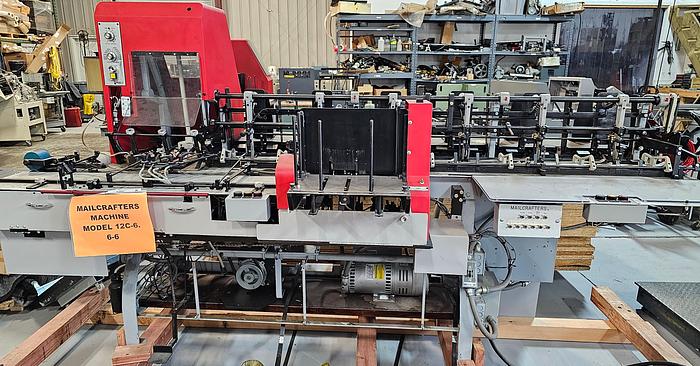
Mailing operations can look simple from the outside: prepare an envelope or package, apply postage, and send it out. In practice, businesses that process dozens, hundreds, or thousands of items each day need a much more organized system. Choosing the right mailing equipment can affect processing speed, postage accuracy, employee workload, and even how reliably customers receive their mail.
Whether you operate a small office, fulfillment department, nonprofit organization, or large distribution center, the goal is not simply to buy more machines. The real objective is to create a mailing workflow where each step—from preparing documents to sealing, addressing, weighing, and dispatching—works efficiently with the others.
Mailing equipment refers to the machines, tools, and systems used to prepare, process, and send business mail. The specific equipment required depends heavily on the organization’s mailing volume, document types, package sizes, and level of automation.
Common examples include postage meters, letter folders, envelope sealers, addressing systems, paper feeders, labeling equipment, document inserters, and mailing scales.
For example, a small professional office that sends 30 invoices per day may only need a reliable printer, folding machine, sealing equipment, and accurate scale. A company processing several thousand customer statements might require automated inserting, folding, addressing, sorting, and postage application.
The important point is that mailing equipment should solve a measurable operational problem. Buying an expensive machine that saves only a few minutes per week rarely makes financial sense.
A practical approach starts with the mailing process rather than the equipment catalog. Map out what happens to a document from the moment it is printed until it leaves the building.
Start by determining how much mail you actually process.
Record the approximate number of:
Volume matters because equipment designed for occasional use can become inefficient when pushed beyond its intended workload.
For example, an office sending 50 letters per day may be able to handle several steps manually. At 1,000 letters per day, manual folding and envelope preparation can consume several employee-hours.
The biggest productivity improvement often comes from fixing the bottleneck rather than upgrading everything.
Suppose a company prints 500 invoices in 20 minutes but spends two hours folding and inserting them. Purchasing faster printers would not solve the main problem. A folder-inserter system could have a much greater operational impact.
The same principle applies to labeling, weighing, sealing, or postage application. Track where employees spend the most time and prioritize that stage.
Not every mailing operation handles the same materials.
A business primarily sending standard letters may prioritize folding, inserting, sealing, and postage equipment. A company shipping catalogs or larger documents may need equipment capable of handling thicker envelopes and different paper sizes.
Consider:
This prevents a common problem: purchasing equipment that performs well under ideal conditions but struggles with the actual materials used every day.
Different equipment serves different stages of the mailing process.
Folding machines automate the process of turning printed sheets into properly folded documents. Inserters then place documents into envelopes.
These systems are particularly useful for invoices, statements, notices, and recurring correspondence.
A company sending monthly statements, for example, can reduce repetitive manual work by automating the folding and inserting process.
Accurate weight measurement is essential when postage depends on mail class, dimensions, or weight.
A scale can help prevent underpayment, which may cause delivery problems, and overpayment, which can unnecessarily increase mailing costs.
For businesses sending packages with different weights, integrating weighing into the workflow can also reduce the chance of employees guessing postage.
Addressing equipment helps apply recipient information consistently and efficiently. Depending on the application, businesses may use printed envelopes, adhesive labels, or automated addressing systems.
Accuracy is especially important for customer communications. A beautifully prepared mailing is still ineffective if the address is incorrect or difficult for postal systems to read.
Manual envelope sealing may not seem significant until employees are processing hundreds of envelopes. Automated sealing equipment can reduce repetitive work and create more consistent results.
However, businesses should test their actual envelopes and paper combinations before committing to a particular system because material compatibility can vary.
One of the biggest mistakes businesses make is selecting equipment based solely on maximum advertised speed. A machine rated for thousands of pieces per hour may not provide those results with every document type or workflow.
Real-world performance depends on paper quality, operator setup, envelope dimensions, document thickness, maintenance, and the complexity of each mailing job.
Another common mistake is ignoring future requirements. If mailing volume is growing rapidly, equipment that barely meets today’s demand may become a bottleneck within a year.
Maintenance is another consideration. Rollers, belts, feeders, sensors, and other components can accumulate dust or wear over time. Regular cleaning and maintenance help maintain consistent performance and reduce unexpected downtime.
Start with standardization. Establish consistent paper sizes, envelope types, document layouts, and addressing formats wherever possible. Standardized materials make automated equipment easier to configure and reduce errors.
Train more than one employee to operate important equipment. If only one person understands a critical machine, vacations, illness, or staff turnover can disrupt the entire mailing process.
Keep a simple maintenance schedule. Record cleaning, inspections, replacement parts, and recurring problems. Patterns in these records can reveal when equipment needs adjustment or replacement.
Also, measure results after implementing new equipment. Compare processing time, error rates, labor requirements, and postage costs before and after the change. The purpose of automation should be measurable improvement, not simply having newer machinery.
For example, if a business previously needed three employees for two hours to prepare a weekly mailing, reducing that workload to one employee for 90 minutes represents a meaningful operational improvement. Those numbers provide a much clearer basis for future equipment decisions.
Effective mailing operations depend on matching equipment to real workflow requirements. Businesses should evaluate mailing volume, identify bottlenecks, understand their materials, and consider maintenance before investing in new systems.
The best setup is not necessarily the largest or most automated one. It is the system that reliably handles the organization’s actual workload while reducing unnecessary manual effort, errors, and processing costs. By evaluating each stage of the mailing process and measuring the results, businesses can build a more efficient operation without spending money on equipment they do not truly need.
QuickBooks contains all of the vital financial data like transactions, customers’ information, invoices, and other reports for the business. A good backup... Read More


Join The Discussion