
Is Mobile Casino Gaming Worth the Hype? Discover the Pros and Cons
- November 5, 2026
- Uncategorized
Is Mobile Casino Gaming Worth the Hype? Discover the Pros and Cons In recent years, mobile casino gaming has seen a remarkable... Read More
 by meh.riztech
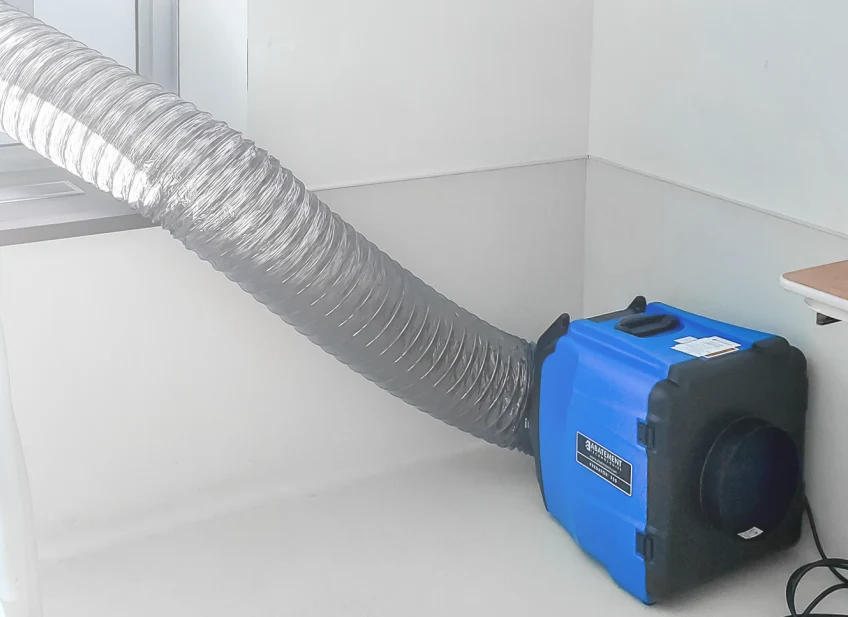
Industrial facilities that handle corrosive chemicals, process gases, fumes, or contaminated air need more than a standard ventilation system. The ductwork carrying treated or untreated exhaust must withstand the chemical and physical conditions inside the system while maintaining reliable airflow. This is where scrubber ducts become an important part of industrial air pollution control and ventilation design.
A scrubber may remove pollutants effectively, but its performance can still suffer if the connected ductwork is poorly designed, undersized, incorrectly installed, or exposed to materials it cannot tolerate. Understanding how scrubber duct systems work helps facility managers, engineers, and maintenance teams avoid premature failures, unnecessary energy consumption, and hazardous leaks.
Scrubber ducts are sections of industrial ductwork used to transport contaminated, corrosive, humid, or chemically treated air to or from an air scrubber system. Depending on the application, the duct may carry process exhaust toward the scrubber or transport cleaned air away from it.
Unlike ordinary HVAC ductwork, these systems often operate in challenging environments. Exhaust streams can contain acids, solvents, alkaline compounds, particulates, moisture, or elevated temperatures. The duct material therefore needs to be selected according to the actual process conditions rather than simply based on airflow requirements.
A typical arrangement may include:
The duct system and scrubber should be considered one integrated airflow system. A highly efficient scrubber cannot compensate for poor duct routing, excessive pressure losses, or uncontrolled air leakage.
Good design starts with understanding what the duct will actually carry. Before selecting materials or dimensions, document the process conditions.
Calculate the required airflow from the process equipment, hood design, enclosure volume, or applicable ventilation criteria. The system must capture contaminants effectively without unnecessarily moving excessive air.
For example, a chemical mixing station may require a specific capture velocity at the source. Increasing airflow without addressing hood geometry can waste fan energy without meaningfully improving contaminant capture.
The total airflow requirement should then be used to size the main ducts and branches.
Every component contributes resistance to airflow. Straight duct sections create friction losses, while elbows, tees, dampers, transitions, and the scrubber itself create additional pressure drops.
A practical system calculation should consider:
The fan must be selected using the combined system resistance at the required operating airflow. Choosing a fan based only on the scrubber’s pressure rating can lead to inadequate performance.
Material selection is one of the most important decisions in scrubber duct construction.
Common options include corrosion-resistant plastics, fiberglass-reinforced plastic, coated metals, stainless steel, and other engineered materials. The appropriate choice depends on chemical concentration, temperature, humidity, pressure, and expected service life.
For instance, a duct transporting wet acidic exhaust may require a substantially different material strategy than one handling dry, relatively neutral particulate exhaust.
Compatibility should be verified against the actual chemicals involved rather than relying on broad descriptions such as “corrosive service.”
Duct geometry directly affects system resistance. Excessive elbows, abrupt transitions, and poorly designed junctions increase pressure losses and can create turbulence.
When planning a layout, use the shortest practical route while maintaining accessibility and required clearances. Where directional changes are unavoidable, properly designed elbows and transitions can reduce unnecessary losses.
Installation quality can determine whether a duct system performs as designed.
Ductwork should have adequate structural support based on its material, diameter, weight, operating conditions, and environmental exposure. Plastic and composite ducts can behave differently from metal systems, particularly when temperature changes affect expansion.
Supports should prevent sagging and excessive mechanical stress without restricting movement where thermal expansion needs to be accommodated.
Air leakage can reduce capture performance and allow hazardous contaminants to escape into occupied areas. Joints, flanges, access doors, and penetrations therefore need appropriate sealing methods.
The sealing approach should be compatible with both the duct material and the chemicals in the exhaust stream. A sealant that works well in ordinary ventilation may deteriorate rapidly in aggressive industrial service.
A duct system should not be designed as though it will never need inspection.
Access points can make it easier to investigate:
Where particulate or condensable material is expected, maintenance access becomes particularly important.
Several recurring problems can undermine scrubber duct performance.
Hot, moisture-laden exhaust can cool inside ductwork and produce condensation. If the system does not account for this, liquid can collect in low points, accelerate corrosion, or interfere with airflow.
Duct routing should avoid unintended liquid traps, and drainage provisions may be necessary depending on the process.
One of the most expensive mistakes is selecting duct material based primarily on initial cost. Chemical compatibility, temperature limits, mechanical strength, UV exposure, and expected service life all matter.
A material that performs well in one process may fail quickly in another.
In systems serving multiple exhaust points, air tends to follow paths of lower resistance. Without proper design and balancing, some locations may receive excessive airflow while others fail to capture contaminants adequately.
Balancing dampers and measured commissioning can help correct this issue.
An undersized duct can produce excessive velocity and pressure loss. An oversized duct may reduce velocity below the level needed to transport certain particulates, while also increasing material and installation costs.
The correct size depends on the contaminant, required airflow, transport characteristics, and system design—not simply on a generic duct-sizing rule.
Treat ductwork inspection as part of the pollution-control system rather than as a separate maintenance task.
First, establish baseline operating data after commissioning. Record airflow, fan pressure, scrubber pressure drop, and other relevant measurements. Later changes can then be compared with the original operating condition.
Second, inspect areas most likely to experience problems. Elbows, low points, joints, transitions, branch connections, and sections near process equipment often deserve particular attention.
Third, investigate changes rather than simply adjusting the fan. If airflow suddenly decreases, the cause could be a blocked duct, damaged component, increased scrubber resistance, failing fan, or altered process condition. Increasing fan speed without identifying the underlying issue may increase energy consumption without solving the problem.
Finally, coordinate duct maintenance with scrubber maintenance. A change in scrubber pressure drop can affect the entire duct network, while duct restrictions can change the operating conditions seen by the scrubber.
Scrubber ducts play a critical role in moving contaminated and treated air safely through industrial pollution-control systems. Their performance depends on much more than duct diameter. Airflow calculations, pressure losses, chemical compatibility, condensation control, support design, sealing, access, and system balancing all influence reliability.
The most effective approach is to design the ductwork around the actual process conditions and then verify performance through commissioning and ongoing inspection. When the duct system, scrubber, fan, and exhaust points are treated as a single engineered system, facilities can achieve more predictable contaminant capture, lower maintenance problems, and longer service life.

QuickBooks contains all of the vital financial data like transactions, customers’ information, invoices, and other reports for the business. A good backup... Read More


Join The Discussion