
Is Mobile Casino Gaming Worth the Hype? Discover the Pros and Cons
- November 5, 2026
- Uncategorized
Is Mobile Casino Gaming Worth the Hype? Discover the Pros and Cons In recent years, mobile casino gaming has seen a remarkable... Read More
 by meh.riztech
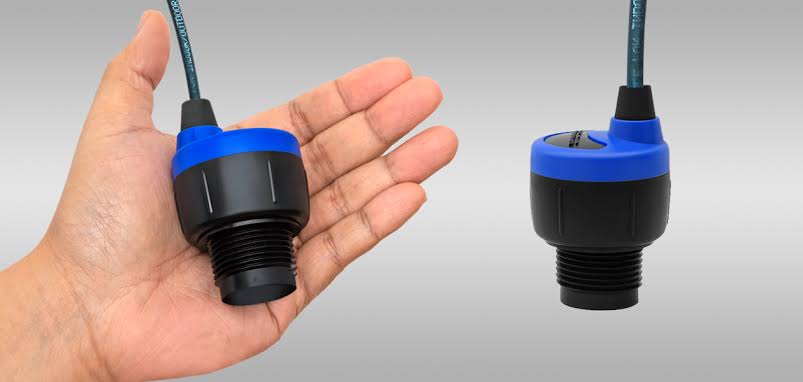
Managing liquid levels sounds straightforward until an overflowing tank, dry-running pump, or unexpected process interruption creates a costly problem. In industrial equipment, storage systems, and automated processes, knowing when a liquid reaches a certain level is often essential for safe and reliable operation. A fluid level switch provides a simple way to detect a predefined liquid level and trigger an electrical response.
Unlike continuous level sensors that measure the actual height of a liquid, a level switch generally works as a threshold device. It detects whether liquid has reached, fallen below, or moved away from a particular point. That makes it useful for applications ranging from pump protection and tank filling to alarm systems and equipment automation.
Choosing the right switch, however, involves more than matching a product to the size of a tank. Liquid characteristics, temperature, pressure, mounting position, electrical requirements, and the consequences of a failed level detection all need to be considered.
A fluid level switch is a device designed to detect the presence or absence of liquid at a predetermined level. When the liquid reaches the switching point, the device changes the state of an electrical circuit. That signal can then activate or deactivate equipment such as a pump, valve, alarm, relay, or control system.
For example, consider a water storage tank supplying a manufacturing process. A switch installed near the lower operating limit can signal a controller to start a fill pump. Another switch near the upper limit can stop the pump before the tank overflows.
This differs from a continuous level transmitter. A transmitter might report that a tank is 63% full, while a switch may simply indicate that the liquid has reached a specific point.
Common technologies include:
Each technology has different strengths, so the liquid and operating environment should guide the selection.
Selecting a switch systematically reduces compatibility problems and unnecessary maintenance. Start with the application rather than the switch technology.
The properties of the liquid are among the most important considerations.
Water, hydraulic oil, fuel, solvents, chemicals, and viscous liquids can behave very differently. A switch that works reliably in clean water may not perform the same way in a thick liquid that tends to coat its sensing components.
Check factors such as:
For chemical applications, wetted materials should be checked carefully against the liquid’s compatibility requirements.
Next, establish exactly what you want the switch to detect.
A tank might need:
For a pump filling a tank, for example, the control logic might start the pump when the liquid drops below a low point and stop it when the liquid reaches a higher point.
Using two separate switching points can create useful operating hysteresis. This prevents the pump from rapidly turning on and off when the liquid level fluctuates around a single threshold.
The physical installation can be just as important as the sensing principle.
Consider whether the switch will be installed vertically through the tank top, horizontally through a tank wall, inside a pipe, or in a confined vessel. The available mounting space, tank geometry, and accessibility for maintenance should all be evaluated.
A float needs enough room to move freely. If the float can contact the tank wall, internal piping, agitators, or other components, false switching may occur.
Never assume that a switch can directly control every connected device.
Check the rated voltage, current, contact configuration, and load type. Motors, solenoids, and pumps can have startup characteristics that differ significantly from simple resistive loads.
In some installations, the level switch should operate a relay or controller rather than directly switching a high-power load. This can reduce electrical stress on the sensing device and make the overall control system easier to troubleshoot.
Level switches appear in many systems because the basic requirement—detecting a particular liquid condition—is extremely common.
A low-level switch can prevent a pump from running when insufficient liquid is available. This is particularly useful when dry running could cause overheating, seal damage, or premature wear.
A high-level switch can stop an incoming pump or close a valve once the tank reaches its desired operating level.
A switch positioned near the top of a containment area can activate an alarm if liquid rises unexpectedly. In facilities where spills create safety or environmental risks, this type of secondary detection can be valuable.
Many machines contain reservoirs for coolant, lubricants, condensate, or hydraulic fluids. A level switch can provide an early warning when the reservoir needs attention.
One common mistake is selecting a switch based only on the liquid level and ignoring the liquid itself. Chemical compatibility, viscosity, temperature, and contamination can all influence reliability.
Another problem is installing a float where turbulence is present. A rapidly moving liquid can cause the float to oscillate, resulting in unwanted switching. A stilling tube or appropriately positioned sensor may help in suitable applications.
Electrical loading is another frequent issue. Connecting a small level switch directly to a large motor without considering contact ratings can shorten component life or create a failure point.
Finally, maintenance should not be overlooked. Floats and probes can accumulate residue, especially in wastewater, process fluids, or liquids containing suspended solids. A switch that was correctly selected can still become unreliable if its sensing mechanism is allowed to foul.
Before installation, document the normal operating range and identify what should happen during both low- and high-level conditions. This makes it easier to verify the control logic.
For critical applications, consider what happens if the switch fails. A system that simply stops working is different from one where a failed component could cause an overflow or equipment damage. Fail-safe design, redundant detection, alarms, or independent shutdown systems may be appropriate depending on the consequences.
Label wiring and switching points clearly during installation. Future technicians should be able to determine which switch controls which function without tracing every wire.
After installation, test the complete system rather than testing only the switch. Manually changing the liquid level, where practical and safe, can verify that the sensor, wiring, relay, controller, alarm, and controlled equipment all respond as intended.
It is also useful to establish a periodic inspection schedule. Look for mechanical restrictions, buildup, corrosion, damaged wiring, loose connections, and changes in operating conditions.
A fluid level switch is a relatively simple component, but selecting and installing one correctly requires attention to the complete application. The liquid’s properties, switching point, mounting arrangement, electrical load, environmental conditions, and required failure response all affect performance.
The best approach is to define what condition the system needs to detect first and then select a sensing technology that fits that requirement. With appropriate installation, testing, and maintenance, a level switch can provide dependable control for pumps, tanks, alarms, and industrial equipment without unnecessary complexity.

QuickBooks contains all of the vital financial data like transactions, customers’ information, invoices, and other reports for the business. A good backup... Read More


Join The Discussion