
How to Invite American Friends to Chhath Puja 2026: A Complete Guide
- November 14, 2026
- Uncategorized
Inviting American friends to Chhath Puja 2026 is a meaningful way to share India’s ancient festival of gratitude to Surya Dev (the... Read More
 by chathpooja
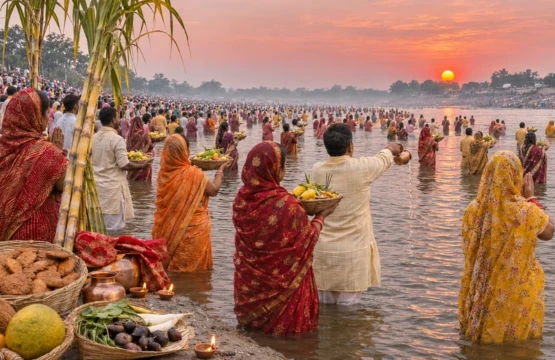
Chhath Puja is a festival dedicated to Surya Dev and Chhathi Maiya, celebrated through fasting, prayers and offerings to the rising and setting Sun. Making Chhath Puja 2026 eco-friendly in the USA means following traditional rituals while reducing plastic waste, choosing reusable puja materials, conserving water and disposing of offerings responsibly.
Families celebrating छठ पूजा 2026 can preserve the spiritual meaning of the festival without creating unnecessary waste or pollution. Sadhana Shop encourages devotees to combine traditional worship with thoughtful environmental practices. Whether you are celebrating at home, near a permitted water body or with a local Hindu community, small sustainable choices can make a meaningful difference.
This guide explains how to select eco-friendly puja items, prepare sustainable prasad, manage offerings and organise a responsible Chhath celebration in the United States.
By Sadhana Shop Editorial Team — Published: November 14, 2026 · Last updated: November 14, 2026
Celebrating Chhath Puja 2026 in an eco-friendly way means worshipping Surya Dev and Chhathi Maiya while protecting the natural environment. Devotees can reduce waste by avoiding single-use plastics, using reusable utensils, selecting natural materials and keeping rivers, lakes and public spaces clean.
Chhath is closely connected with nature because the Sun, water, fruits and other natural elements have an important place in its rituals. Protecting these resources is a meaningful way to respect the festival’s spiritual message.
The environmental benefits of responsible celebrations are also supported by public guidance. According to the US Environmental Protection Agency (EPA), only 5% of the 66.2 million tons of wasted food generated in the US retail, food service and residential sectors in 2019 was composted. This highlights why responsible food preparation and waste management matter during festivals and community gatherings.
Chhath Puja celebrates the Sun as a source of light, energy and life. Devotees also use fruits, flowers, water and traditional food offerings during the rituals.
Respecting nature during Chhath can include:
An eco-friendly celebration reduces the amount of waste produced during religious gatherings. It can also help prevent littering, reduce unnecessary consumption and encourage families to adopt sustainable habits.
For example, using washable steel plates instead of disposable plastic plates reduces single-use waste. Composting suitable fruit and flower waste can also return organic material to the soil, provided the local composting programme accepts those items.
Choosing reusable, durable and responsibly sourced materials is one of the easiest ways to make Chhath Puja 2026 more sustainable in the USA. Traditional items such as bamboo baskets, natural decorations, clay diyas and metal utensils can help reduce dependence on disposable products.
Consider these materials when preparing your puja arrangements:
Single-use plastic bags, plates, cups and wrappers can become litter when they are not disposed of properly. They may also contaminate recycling and composting collections.
For a greener celebration:
Not necessarily. A product labelled biodegradable or compostable may require specific conditions or a commercial composting facility to break down properly. Some compostable plastics are not accepted by ordinary recycling or household composting programmes.
The EPA advises consumers to check whether their local composting programme accepts a particular material before placing it in a compost bin. When uncertain, use durable reusable items instead.
Preparing eco-friendly prasad means planning quantities carefully, choosing fresh ingredients and avoiding unnecessary packaging. Families can prepare traditional offerings at home using locally available fruits and ingredients while following their own family customs.
The selection of prasad depends on family traditions and regional customs. Common offerings may include:
Choose fresh ingredients and avoid buying more than your family or community can reasonably use.
Food waste can be reduced through simple preparation and storage practices.
Yes, suitable flowers, fruit peels and other accepted organic materials can be composted if your local composting service or home composting system permits them.
Remove plastic threads, stickers, foil, synthetic decorations and other non-compostable materials before composting. Do not assume that every item used in a religious ritual belongs in the compost bin.
The EPA explains that composting is an oxygen-based process that turns suitable organic materials into a soil amendment. Check your local municipality’s instructions because accepted materials vary between communities.
Devotees can offer Arghya responsibly by choosing an appropriate and permitted location, using a small quantity of water and ensuring that flowers, food, containers and other ritual materials are not left behind or released into natural water bodies.
Chhath Puja traditionally involves offering water to the setting and rising Sun. Families in the USA should consider local environmental rules before planning a gathering near a river, lake, pond or public waterfront.
The appropriate location depends on local rules, safety and the availability of permitted facilities. Families may consider:
Before organising a public gathering, check local park regulations, water-body restrictions and any event permit requirements.
Follow these simple precautions:
Do not assume that natural offerings can always be released into rivers, lakes or ponds. Food, flowers and other organic material can still affect local water conditions, especially when many people gather.
Use designated collection or composting facilities where available. If an organised event provides a specific disposal arrangement, follow its instructions and local environmental rules.
Sustainable decorations can create a beautiful worship area without depending on disposable plastic products. Families can use reusable fabric, natural flowers, bamboo items and decorations that can be stored and used again.
Here are practical decoration ideas for homes and community gatherings:
Traditional clay diyas can be used as part of the celebration, but open flames require care. Keep lamps away from curtains, dry leaves, cloth, paper decorations and bamboo baskets.
For community spaces, consider suitable reusable or energy-efficient lighting where permitted. Never leave a burning diya unattended, and follow local fire-safety rules.
Families and community organisers can plan a low-waste Chhath celebration by arranging reusable supplies, clear waste-collection points and a clean-up plan before the event begins.
A little preparation can prevent unnecessary waste during the celebration.
Community groups can encourage devotees to bring reusable water bottles, avoid plastic packaging and take personal waste home when suitable disposal facilities are unavailable.
They can also coordinate with local authorities and religious organisations to identify appropriate locations and waste-management arrangements. Sadhana Shop encourages families to learn about traditional rituals while making thoughtful choices that support cleaner celebrations.
Shiv Chalisa is a devotional hymn dedicated to Lord Shiva. It is not a central ritual of Chhath Puja, which focuses on Surya Dev and Chhathi Maiya. However, devotees who regularly worship Lord Shiva may include Shiv Chalisa in their personal prayer routine during the festival.
Eco-friendly worship is not limited to the materials used for offerings. It also includes practising devotion with simplicity, avoiding unnecessary consumption and respecting the surroundings in which rituals take place.
Yes, devotees may recite Shiv Chalisa as part of their personal worship if it is consistent with their family traditions. The main Chhath rituals should still be observed according to the customs followed by the family.
A simple prayer routine can include:
Sustainable celebrations help families maintain traditional practices while reducing unnecessary waste. They also encourage children and younger generations to understand that respecting nature is an important part of responsible community life.
The main benefits include:
Making Chhath Puja 2026 eco-friendly in the USA is possible through simple choices such as using reusable puja items, preparing suitable quantities of prasad, avoiding single-use plastic and keeping water bodies clean. These practices allow families to honour Surya Dev and Chhathi Maiya while showing respect for the environment.
Key takeaways from this guide:
At Sadhana Shop, we believe that understanding spiritual traditions and practising them thoughtfully can help families stay connected with their faith. Explore Sadhana Shop’s devotional resources and celebrate छठ पूजा 2026 with devotion, gratitude and care for nature.
You can make Chhath Puja 2026 eco-friendly by using bamboo baskets, reusable metal utensils, natural decorations and washable containers. Avoid single-use plastic, prepare only the required quantity of prasad, and collect all waste after the rituals. Always follow local rules when celebrating near rivers, lakes or public spaces.
You can use bamboo baskets, clay diyas, reusable steel utensils, cotton cloth, natural flowers and washable containers. These items can help reduce disposable waste during the festival. Choose durable products and check local disposal or composting guidelines before purchasing items labelled biodegradable or compostable.
Yes, families can celebrate Chhath Puja at home according to their traditions and practical circumstances. They can arrange a clean worship space, prepare traditional offerings and use a suitable vessel for Arghya. If planning a public gathering or using a shared water body, check local permissions and safety requirements.
Separate suitable organic materials from plastic, foil, stickers and synthetic decorations. Compost flowers and fruit waste only if your local programme accepts them. Handle leftover food safely, and never leave offerings or packaging around rivers, lakes or public worship areas. Follow local waste-management instructions.
Yes, you can read Shiv Chalisa as part of your personal devotional routine. It is dedicated to Lord Shiva and is separate from the central Chhath rituals dedicated to Surya Dev and Chhathi Maiya. Follow your family traditions and keep the main festival observances as prescribed.
Sadhana Shop shares devotional content and educational resources that help readers understand Hindu festivals, prayers and spiritual traditions. Its articles help families learn about the meaning of celebrations such as Chhath Puja and encourage them to remain connected with their cultural and devotional practices.
Sadhana Shop Editorial Team creates educational and devotional content covering Hindu festivals, prayers, spiritual traditions and religious practices. The team’s aim is to make cultural and devotional information accessible to readers and families.
Inviting American friends to Chhath Puja 2026 is a meaningful way to share India’s ancient festival of gratitude to Surya Dev (the... Read More
Chhath Puja is a four-day Hindu festival dedicated to Surya Dev (the Sun God) and Chhathi Maiya, observed with fasting, prayers and... Read More

Inviting American friends to Chhath Puja... Read More
Chhath Puja 2026 is more than... Read More
Chhath Puja is a festival dedicated... Read More
Join The Discussion