Nadia had three days in the Grenadines and a plan that fell apart by lunch on day one. The ferry to Carriacou she’d read about online ran twice a week, not daily, and the schedule she’d found was from the previous season. She ended up asking a hotel concierge to call a water taxi operator directly, in person, because there was no app, no live schedule, and no way to book the one connection her whole itinerary depended on without standing in a lobby hoping someone picked up the phone.
That gap between how people plan a Caribbean trip and how the region actually moves is exactly what’s pulling a Travel App Development Company in Austin into a market it has no obvious geographic connection to. Caribbean travel demand is climbing hard heading into this year, with search interest up double digits and islands like Grenada, Sint Maarten, and Aruba pulling ahead of the broader regional trend, and a lot of that demand is running straight into the same problem Nadia hit: booking a flight to the region is easy, moving between islands once you’re there usually isn’t. Here’s what’s actually changing, and why the fix is landing in app form rather than through the tourism boards themselves.
Why the Caribbean Was Always a Hard Fit for Generic Travel Apps
Most travel apps are built around a single continuous trip: one flight, one hotel, maybe a rental car, all bookable through platforms designed for connected road and rail networks. The Caribbean doesn’t work that way. It’s dozens of separate island nations, each with its own currency, its own ferry operators, its own entry requirements, and often no shared booking infrastructure between them at all. A traveler trying to island-hop through the Eastern Caribbean has historically had to piece together flights on small regional carriers, ferry schedules published on operator websites that don’t always stay current, and local knowledge that never quite makes it into a mainstream app. Generic travel platforms built for Europe or North America simply don’t have anywhere to plug that complexity in.
What’s Actually Solving the Island-Hopping Problem
The fix showing up now looks a lot like what ferry-booking platforms have already proven works elsewhere, aggregating real-time schedules across dozens of operators into one searchable, bookable interface instead of forcing travelers to check each route separately. Applied to the Caribbean, that means an app that pulls live departure times, seat availability, and pricing from the small ferry companies connecting islands like Guadeloupe, Dominica, Martinique, and St. Lucia, plus the regional puddle-jumper flights filling the gaps ferries can’t reach. Add offline maps for areas with unreliable data coverage, real-time weather alerts relevant to small-boat crossings, and multi-currency payment handling across a region where the same trip can cross four different currencies in a week, and the app starts solving a genuinely regional problem rather than a generic travel one.
Why This Keeps Landing on a Development Company’s Desk Instead of a Tourism Board’s
Government tourism boards move slowly, and cross-border coordination between a dozen independent island nations moves slower still. A regional ferry service connecting several islands has been in the works for the Eastern Caribbean, and even that kind of infrastructure initiative takes years of stakeholder meetings before a single boat leaves the dock. A development team building an app doesn’t need a dozen governments to agree on anything. It needs API access to existing ferry and flight operators, a clean interface, and a business model, which is why the private sector keeps outpacing the public one on exactly this kind of connective infrastructure. Hotels and destination marketing organizations increasingly commission these builds directly, treating a well-built regional travel app as marketing and infrastructure at once.
The Business Case Beneath the Booking Surge
None of this is theoretical demand. Cruise arrivals across the region are already running well above pre-pandemic levels, hotel occupancy has stayed strong even as room rates climbed, and the shift in traveler interest toward the Caribbean has accelerated as other destinations lost ground to safety concerns and travelers redirected their bookings. Mobile app development cost for a build like this tracks closely with how many third-party operators the app needs to integrate with, since every additional ferry line, airline, or local payment processor is its own API relationship to negotiate and maintain, not a one-time technical hurdle. A single-island itinerary app is a modest build. A platform aggregating a dozen ferry operators, flight schedules, and currencies across the entire Eastern Caribbean is a considerably larger one, and most of that cost lives in the integration work rather than the interface travelers actually see.
What Nadia’s Trip Would Look Like Now
A traveler running Nadia’s same itinerary today would open one app, see every ferry and flight option between her islands on the same screen, book the water taxi she needed without a phone call to a concierge, and get an alert if rough seas pushed a crossing back a few hours. None of that changes what the Caribbean actually is, a region built around water rather than roads. It changes whether a traveler can plan around that reality instead of discovering it the hard way, standing in a hotel lobby with a schedule that was already out of date before she landed. That’s the actual shift underway across the region right now, not a new destination trending for a season, but the connective infrastructure finally catching up to demand that’s been there all along.

 by
by 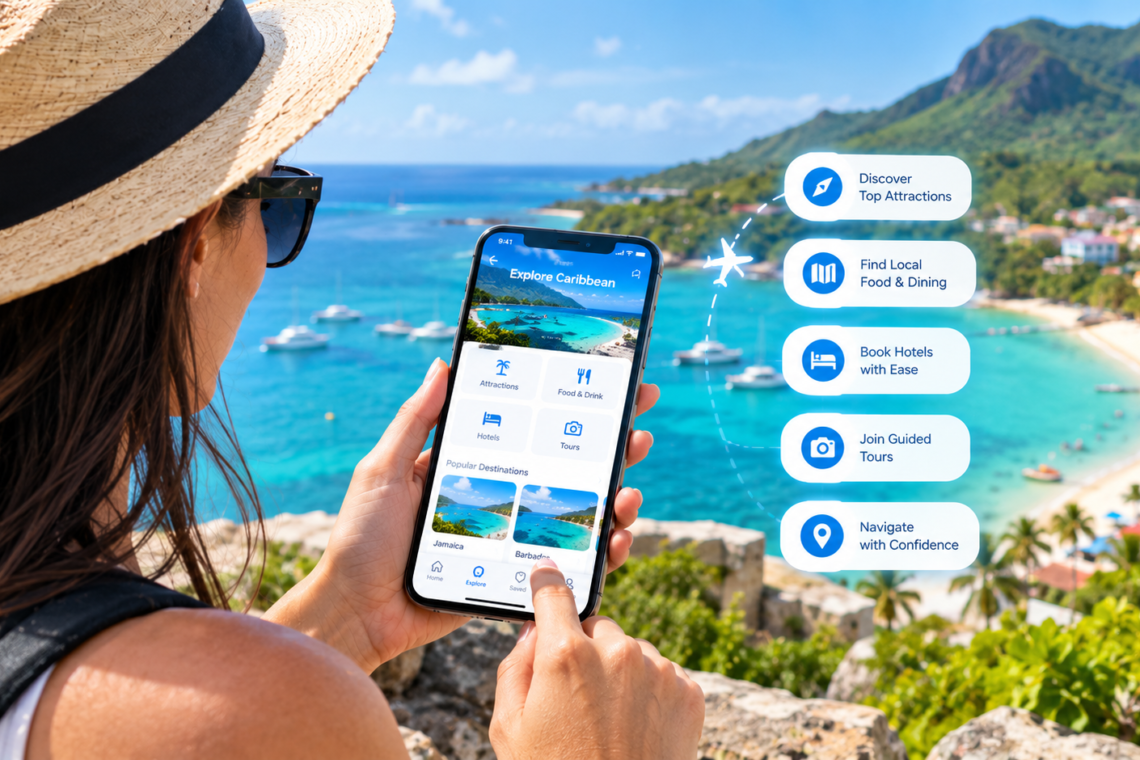



Join The Discussion