
Is Mobile Casino Gaming Worth the Hype? Discover the Pros and Cons
- November 5, 2026
- Uncategorized
Is Mobile Casino Gaming Worth the Hype? Discover the Pros and Cons In recent years, mobile casino gaming has seen a remarkable... Read More
 by meh.riztech
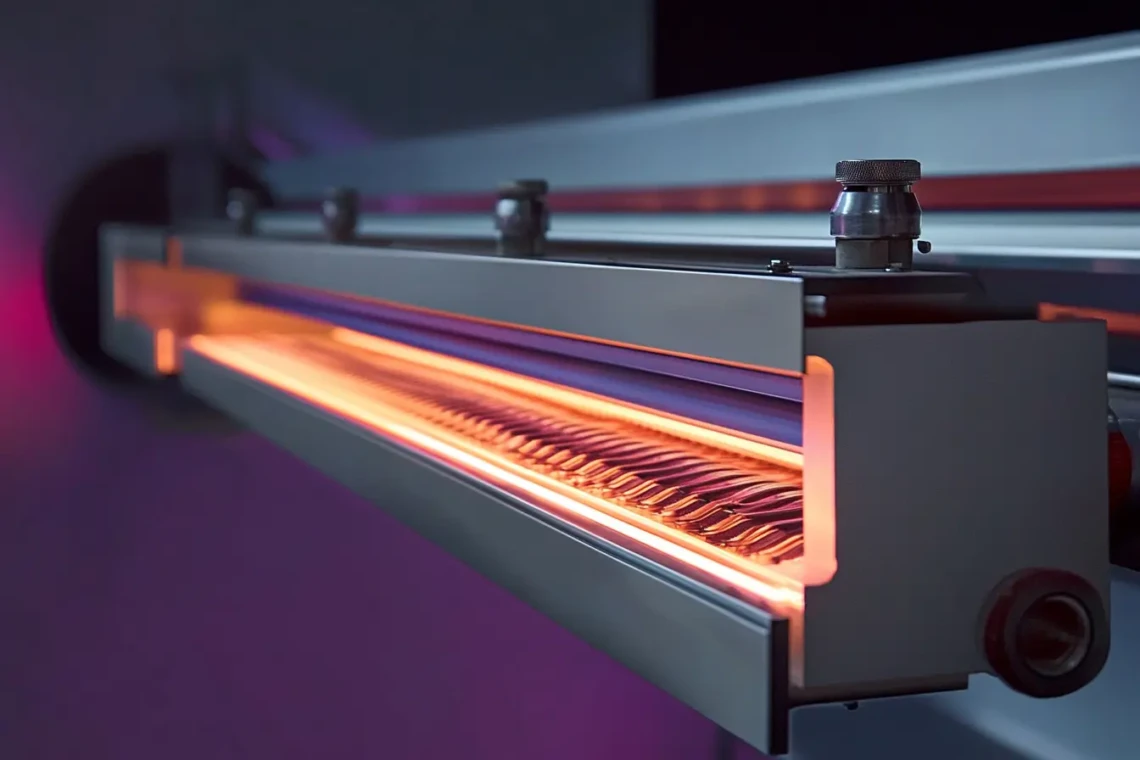
Drying is often one of the most energy-intensive stages in industrial production. Whether a manufacturer is curing coatings, drying inks, processing textiles, treating wood, or removing moisture from food and other materials, conventional heating methods can require significant time and energy. The challenge is not simply reaching a target temperature—it is transferring heat efficiently without damaging the product.
That is where infrared drying systems can offer a different approach. Instead of relying primarily on heated air to warm a product, infrared technology transfers radiant energy directly to a surface. When properly designed and controlled, this can shorten drying cycles, improve process consistency, and reduce unnecessary heating of surrounding air and equipment.
Infrared drying systems use infrared radiation to transfer thermal energy to a material. Infrared emitters produce electromagnetic radiation within specific wavelength ranges, and the material absorbs some of that energy. The absorbed radiation is converted into heat, allowing moisture, solvents, or other volatile components to leave the product.
The key difference from many conventional ovens is how the heat reaches the material.
A hot-air system generally heats air first. That heated air then transfers energy to the product through convection. An infrared system can transfer energy directly from the emitter to the product surface through radiation.
This does not mean infrared completely replaces convection in every application. In many industrial installations, infrared and hot-air heating are combined. Infrared can rapidly bring the surface to the desired temperature, while airflow helps remove evaporated moisture and maintain the required drying environment.
The effectiveness of infrared drying depends on several variables, including emitter wavelength, material properties, distance between the emitter and product, exposure time, airflow, moisture content, and line speed.
Designing an effective infrared drying process requires more than installing infrared lamps above a production line. The process needs to be matched to the material and the type of moisture or coating being removed.
Start by determining what is being dried. Paper, plastic, wood, textiles, coatings, and food products absorb infrared energy differently.
Two materials exposed to the same infrared source can reach very different temperatures. A dark coating, for example, may absorb radiation more readily than a reflective surface.
Understanding absorption characteristics helps determine the appropriate emitter and operating conditions.
The next question is whether the process is removing water, solvents, or another volatile substance.
Water-based coatings behave differently from solvent-based coatings. Similarly, removing moisture from a thick wood component presents different challenges from drying a thin printed layer.
The evaporation mechanism influences temperature requirements, airflow, and exposure time.
Infrared emitters operate across different wavelength ranges, commonly described as short-wave, medium-wave, and long-wave infrared.
Short-wave infrared generally provides rapid, high-intensity heating and can be useful when fast response times are important. Medium- and long-wave systems can be appropriate for materials requiring different absorption characteristics or gentler heating.
The correct choice should be based on the product rather than simply selecting the emitter with the highest output.
Once the energy source is selected, exposure must be controlled.
A product moving through a production line may only remain under the emitters for seconds or minutes. Increasing emitter power, reducing line speed, changing emitter distance, or adjusting the heated area can alter the drying result.
For continuous manufacturing, line speed is especially important because a small process change can significantly affect drying performance.
Heating alone does not guarantee effective drying.
As moisture evaporates, it creates a layer of humid air near the product surface. If that moisture remains trapped around the material, evaporation can slow down.
Proper ventilation or forced airflow helps carry moisture away. This is one reason hybrid infrared-convection systems can be effective: infrared provides rapid energy transfer while controlled airflow supports moisture removal.
Infrared drying has applications across numerous industries.
Printing operations often need coatings or inks to dry quickly between production stages. Infrared heating can provide rapid surface heating without requiring an entire large oven to reach a high temperature.
For example, a manufacturer producing coated packaging may use infrared heating between coating and finishing stages to increase line speed while maintaining controlled drying conditions.
Wood products contain moisture that must be reduced carefully. Excessively aggressive heating can create surface defects while leaving moisture deeper inside the material.
Infrared can be used as part of a controlled drying process, particularly where localized or rapid heating is useful.
Textile manufacturing frequently involves drying after washing, dyeing, coating, or finishing. Infrared heating can provide additional thermal energy while reducing the need to heat large volumes of air.
Infrared heating can also be incorporated into food-processing applications where surface heating or moisture reduction is required. However, food applications demand careful control of product temperature, exposure time, hygiene, and process validation.
One of the biggest mistakes is assuming that more infrared power automatically means better drying.
Excessive energy can overheat the surface before moisture inside the material has had enough time to migrate outward. The result may be scorching, cracking, blistering, uneven coating, or other quality problems.
Another common issue is poor airflow. A system may deliver plenty of thermal energy but still produce disappointing drying performance if evaporated moisture cannot escape.
Uneven emitter positioning is another concern. If one section of a production line receives significantly more radiation than another, product quality can vary across the web, sheet, panel, or conveyor.
Finally, operators sometimes evaluate drying solely by surface appearance. A coating can look dry while retaining moisture or solvent beneath the surface. Process validation should therefore consider the actual performance requirements of the finished product.
Start with small-scale testing. Before committing to a production configuration, test representative materials under different wavelengths, power levels, distances, and exposure times.
Measure product temperature. Do not rely only on emitter settings. Surface temperature measurements can reveal whether the material is receiving too much or too little energy.
Monitor moisture, not just heat. A high product temperature does not necessarily mean efficient moisture removal. Moisture measurements can help distinguish genuine drying from simple surface heating.
Consider hybrid systems. Combining infrared with convection can provide rapid heating while maintaining effective moisture removal.
Keep emitter distance consistent. Changes in distance can significantly affect radiant intensity. Mechanical alignment and product positioning should therefore be treated as part of process control.
Build controls around the production line. Line speed, emitter power, airflow, and product temperature should work together. A change to one variable may require adjustments elsewhere.
Infrared drying systems provide a highly controllable way to transfer heat directly to materials, making them useful for applications where rapid heating, targeted energy delivery, or reduced drying time is important. Their effectiveness, however, depends on matching the infrared technology to the material, moisture type, production speed, and required finish.
The best results rarely come from simply increasing temperature or power. Careful testing, appropriate wavelength selection, controlled exposure, adequate airflow, and reliable temperature and moisture monitoring are what turn infrared heating into an effective industrial drying process. When these factors are considered together, infrared technology can become a valuable component of a modern, energy-conscious production line.

QuickBooks contains all of the vital financial data like transactions, customers’ information, invoices, and other reports for the business. A good backup... Read More
For UK gamblers looking to manage... Read More

The Role of a Range in... Read More

The Benefits of Quality Metal Fencing... Read More
Join The Discussion