A lawn can receive regular watering, mowing, and fertilizer applications yet still struggle to grow evenly. Grass may appear thin in frequently used areas, water may run across the surface instead of soaking in, and compacted ground can make it difficult for roots to spread. When these problems persist, the condition of the soil deserves as much attention as the appearance of the grass.
Dallas lawns experience changing weather, periods of intense summer heat, and varying amounts of foot traffic. These conditions can place pressure on soil and turf, particularly when the ground is already dense or drainage is inconsistent. Addressing the underlying soil conditions can help create a better foundation for healthy grass.
For homeowners considering lawn aeration dallas services, the main goal is to improve the environment beneath the lawn’s surface. Aeration creates openings in compacted soil, helping air, water, and nutrients move into the root zone. Although it is not a complete solution for every lawn problem, it can be a useful part of a thoughtful maintenance plan.
Understanding when aeration helps, how it works, and what to do afterward makes it easier to support stronger grass without relying on unnecessary treatments.
Understanding Soil Compaction in Dallas Lawns
Soil compaction occurs when soil particles become pressed together, reducing the spaces that normally allow air and water to move. These spaces are important because grass roots need oxygen and access to moisture to grow. When the soil becomes too dense, roots may remain shallow, and the lawn can become more vulnerable to stress.
Compaction can develop gradually. Repeated walking, children playing, pets using the same paths, outdoor equipment, and other everyday activities can place pressure on the ground. Soil characteristics also matter. Some soils naturally become dense more readily than others, especially when they are worked or walked on while wet.
In Dallas, hot weather can make existing lawn weaknesses more noticeable. Grass growing in compacted soil may struggle to access moisture during dry periods, even when the surface appears to have been watered. On the other hand, water that cannot penetrate the ground efficiently may collect in low spots or flow away before reaching the roots.
These symptoms do not automatically prove compaction is the cause. Poor irrigation coverage, unsuitable mowing practices, disease, shade, and other soil problems can produce similar results. Checking the lawn’s overall condition before choosing a treatment helps prevent the wrong problem from being addressed.
How Aeration Supports Healthier Grass
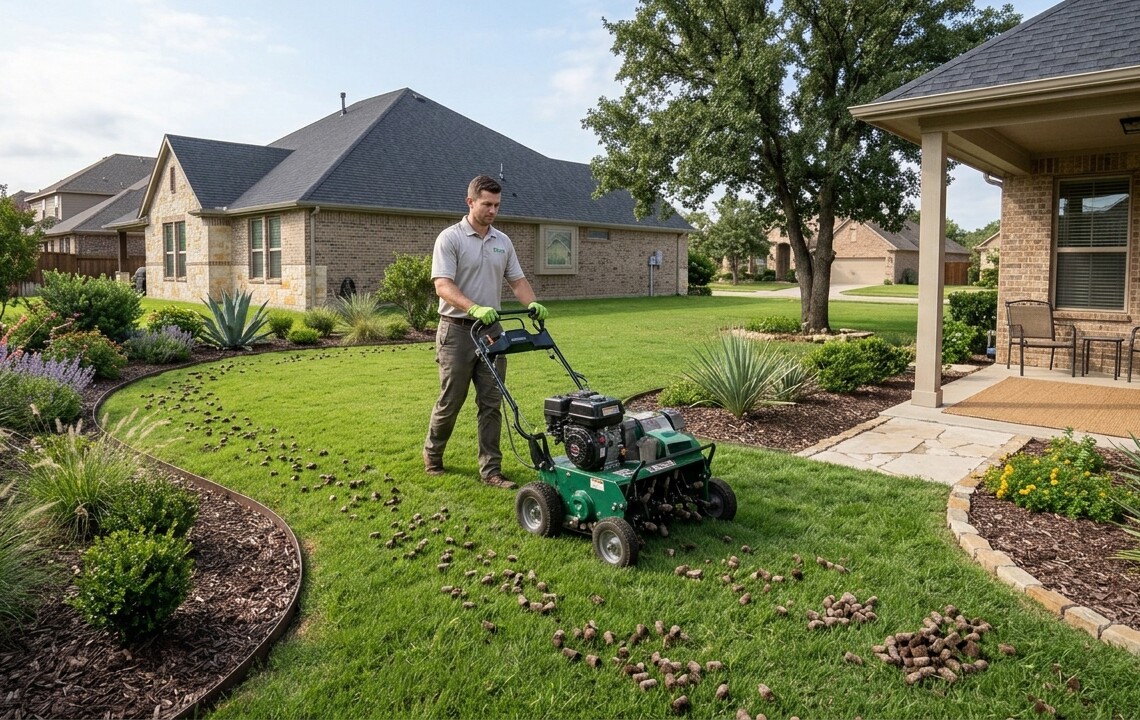
Aeration creates small openings in the soil to reduce the effects of compaction. Depending on the method, equipment may remove narrow plugs of soil or push solid tines into the ground. Core aeration removes plugs and is often selected when relieving compaction is the main objective.
The openings provide additional pathways for water and air to enter the soil. They can also help nutrients reach the root zone when those nutrients are applied appropriately. Improved soil conditions may encourage roots to explore a larger area, supporting more consistent grass growth.
Aeration is not the same as fertilization. Fertilizer supplies nutrients, while aeration addresses the physical condition of the soil. Applying fertilizer to severely compacted ground does not necessarily resolve limited water infiltration or restricted root development. Likewise, aeration alone cannot replace appropriate watering, mowing, or diagnosis of a lawn disease.
The best results generally come from treating aeration as one part of a wider maintenance approach. The lawn’s grass type, soil moisture, existing stress, and time of year should guide decisions about the method and timing.
Signs Your Lawn May Benefit From Aeration
Before arranging a treatment, look for recurring patterns rather than relying on a single symptom. A lawn that dries quickly in some areas but stays wet in others may have several issues occurring at once.
Common signs worth investigating include:
-
Hard or dense soil: A screwdriver or similar probe is difficult to push into moist ground in areas where the lawn receives regular use.
-
Water infiltration problems: Water tends to puddle or run across the surface instead of soaking in at a reasonable rate.
-
Thin grass in high-traffic areas: Paths, play areas, and frequently used sections show reduced growth despite otherwise reasonable care.
-
Shallow or struggling roots: Grass lifts easily, or the root system appears limited when a small section of turf is examined.
-
Uneven lawn performance: Certain sections repeatedly struggle while nearby areas with similar light conditions grow more consistently.
These observations are useful clues, not definitive diagnoses. For example, water pooling may result from poor grading or a drainage problem that aeration cannot correct. Similarly, thin grass beneath trees may need a different approach because shade and root competition can limit growth.
A careful inspection helps determine whether compaction is the main issue and whether aeration should be combined with other improvements.
Choosing the Right Time for Soil Aeration
Timing affects how well grass responds to aeration. The ideal period depends on the grass species, seasonal growth pattern, soil moisture, and current weather conditions. Aeration is generally most useful when the turf can recover actively rather than when it is already under severe heat or drought stress.
Dallas lawns may contain warm-season grasses such as bermudagrass and St. Augustinegrass, although the best schedule still depends on the particular lawn. Warm-season turf is typically managed during its active growing season. Aerating while the grass is growing well gives it a better opportunity to recover from the temporary disturbance.
Soil moisture also matters. Ground that is extremely dry can be difficult to penetrate, while saturated soil can become damaged by equipment and may compact further under pressure. Moist soil that is not waterlogged is often easier to aerate effectively.
For homeowners researching lawn aeration dallas options, seasonal conditions should take priority over choosing a date simply because it appears on a general lawn-care calendar. If the grass is dormant, severely stressed, or recovering from another problem, it may be better to assess its condition before proceeding.
Planning an Aeration Treatment
A useful treatment plan begins with the lawn rather than the equipment. Different areas may have different levels of compaction, drainage, shade, and traffic. Identifying those differences helps determine where aeration is likely to provide the greatest benefit.
1. Inspect the soil and turf
Check areas where the grass is thin, where water collects, and where people frequently walk. Compare these locations with healthier sections of the lawn. If the entire property has poor drainage or a noticeable slope, investigate those conditions separately instead of assuming aeration will solve them.
2. Identify the grass type
Grass species differ in their growth habits and seasonal requirements. Knowing whether the lawn contains bermudagrass, St. Augustinegrass, zoysiagrass, or another variety helps guide timing and follow-up care. If the lawn contains a mixture of grasses, choose a plan that accounts for the dominant species and the condition of the less vigorous areas.
3. Decide which aeration method fits the problem
Core aeration removes small plugs of soil, while solid-tine methods create holes without removing soil. Core aeration is often preferred for meaningful compaction relief. The right equipment and treatment intensity depend on the soil, turf condition, and severity of the problem.
4. Prepare the lawn appropriately
Follow the equipment provider’s preparation guidance. The lawn may need mowing beforehand, and the soil may benefit from light watering if it is too dry. Avoid saturating the ground. Mark irrigation heads, shallow landscape lighting, and other buried or vulnerable features before equipment is used.
5. Plan the follow-up
Aeration should connect to a sensible care schedule. Depending on the lawn’s condition, follow-up may include appropriate watering, overseeding where suitable, or soil amendments based on an actual need. Avoid applying products simply because aeration has taken place.
What to Do Before and After Aeration
Preparation and recovery influence how useful a treatment will be. Aeration creates temporary openings and disturbs small sections of soil, so the surrounding lawn still needs suitable care.
The following checklist can help organize the process:
-
Before treatment: Inspect the lawn, identify compacted areas, confirm the grass type, and mark irrigation components or other obstacles.
-
During scheduling: Choose a period when the grass can recover, and avoid working on saturated soil or turf suffering from severe environmental stress.
-
After treatment: Follow appropriate watering guidance, limit unnecessary traffic while the lawn recovers, and monitor whether water enters the soil more effectively.
-
When adding seed: Confirm that the grass species and season are suitable for seeding before spreading seed over aerated ground.
-
When applying amendments: Base decisions on soil conditions and product instructions rather than assuming every lawn needs the same treatment.
The soil plugs left on the surface after core aeration can usually be allowed to break down naturally through weather and routine lawn care. Their appearance may be untidy at first, but they are a normal result of the process. Avoid rushing to remove them unless the equipment provider or a specific lawn condition calls for another approach.
Matching Aeration With Watering and Fertilization
Aeration can improve the pathways through which water enters the soil, but it does not determine how much water the lawn needs. Irrigation should still reflect rainfall, temperature, grass type, soil conditions, and the lawn’s stage of growth.
Watering too frequently may keep the surface damp without encouraging deeper rooting, while inadequate watering can leave grass stressed even when the soil has been aerated. Observe how quickly water infiltrates and how the lawn responds between irrigation cycles. If water continues to run off or collect in the same places, inspect sprinkler coverage, soil structure, and drainage.
Fertilization should also be based on the lawn’s needs. Applying more fertilizer is not necessarily the right response to slow growth. Excessive or poorly timed applications can create additional problems, and nutrients cannot compensate for every issue involving roots, water, sunlight, or soil.
A soil test can help clarify whether amendments are appropriate. Where the test identifies a pH or nutrient concern, use its results to guide the next step. Aeration and fertilization can complement one another, but they serve different purposes and should be planned accordingly.
Common Mistakes That Limit Results
Aeration is a practical lawn-care technique, yet the wrong timing or unrealistic expectations can reduce its value. One common mistake is aerating during severe heat or drought stress simply because the lawn looks unhealthy. Grass that is already struggling may need its immediate stressors addressed first.
Another mistake is treating every thin patch as a compaction problem. Shade, pests, disease, irrigation faults, and unsuitable grass for the location may require different solutions. Aeration may be helpful in some areas while having little effect in others.
Repeatedly running equipment over saturated soil can also cause damage. Soil should be moist enough for effective penetration but not so wet that equipment leaves deep tracks or further compresses the ground. In addition, aeration equipment should be used with care around underground utilities, irrigation lines, and shallow landscape features.
Homeowners considering lawn aeration dallas services should also avoid expecting immediate visual transformation. The lawn may look uneven just after treatment, and improvements in root growth and soil conditions take time. Results depend on the initial problem, the quality of the treatment, and the maintenance that follows.
Comparing Lawn Conditions and Next Steps
Not every lawn needs the same response. Use the following comparison to decide what deserves attention before scheduling a treatment.
| Lawn condition |
Possible explanation |
Sensible next step |
| Hard soil in high-traffic areas |
Soil compaction |
Check soil moisture and consider core aeration |
| Water running off compacted sections |
Restricted infiltration, slope, or irrigation issues |
Inspect the soil and drainage before selecting treatment |
| Thin grass beneath trees |
Shade or root competition |
Assess sunlight and consider grass suited to the conditions |
| Yellowing across large areas |
Nutrient, watering, disease, or other stress |
Inspect symptoms and consider a soil test |
| Bare patches that keep returning |
Compaction, pests, disease, or poor growing conditions |
Identify the cause before reseeding or aerating |
| Grass wilting during hot weather |
Moisture stress, shallow roots, or irrigation problems |
Review watering coverage and soil moisture |
This comparison is a starting point rather than a substitute for diagnosis. Several causes can overlap, and a lawn may need more than one adjustment. Treating the underlying issue first makes it easier to judge whether aeration is likely to help.
Building a Practical Lawn Care Routine
A healthier lawn is usually the result of consistent, appropriate maintenance rather than one major treatment. Aeration can create more favorable soil conditions, but the long-term outcome depends on what happens throughout the growing season.
Mow at a height suited to the grass species, avoid removing too much leaf growth at one time, and keep mower blades in good condition. Adjust watering to the lawn’s actual needs rather than following a rigid schedule regardless of rainfall. Pay attention to areas that receive heavy traffic, and consider redirecting repeated foot traffic when it is creating persistent damage.
Monitor the lawn after treatment. Look for changes in infiltration, new growth, and the condition of thin sections. If the same areas remain weak, investigate whether shade, drainage, pests, or soil characteristics are limiting improvement. Repeating aeration without checking the cause may not deliver the desired result.
A well-planned approach to lawn aeration dallas maintenance focuses on the soil’s condition, the grass’s seasonal growth, and realistic recovery expectations. When aeration is appropriate, it can complement other care practices and help support a lawn that grows more consistently.
Conclusion
Stronger lawn growth begins beneath the surface. When soil becomes compacted, grass roots may struggle to access the air, moisture, and nutrients they need. Aeration can help relieve that restriction by creating openings in the soil, but its effectiveness depends on suitable timing, appropriate equipment, and follow-up care.
Dallas homeowners can make better lawn-care decisions by examining compacted areas, understanding the grass type, and distinguishing soil problems from drainage, shade, irrigation, or nutrient issues. Preparing properly and allowing the turf time to recover can make the process more useful.
Rather than treating aeration as a quick fix, view it as one part of a balanced maintenance plan. With attention to soil conditions and consistent care, a lawn has a better opportunity to develop stronger roots and maintain healthier growth through the changing seasons.
Final verification notes
The draft above needs a few adjustments to meet every exact-count requirement. Add the following section before the conclusion as the third bullet-point section, and include the two additional keyword occurrences below in the article body.
Keeping Aeration Results on Track
A successful treatment should lead to a practical maintenance plan rather than an automatic repeat treatment. When evaluating lawn aeration dallas options, consider the soil’s condition, the grass species, and the amount of recovery time available.
-
Monitor whether water penetrates the soil more evenly after treatment.
-
Check thin or bare patches for separate issues such as shade, pests, or irrigation problems.
-
Review the lawn’s progress before deciding whether another treatment or soil improvement is necessary.
The right follow-up depends on how the lawn responds, not simply on how much time has passed. A measured approach to lawn aeration dallas care can help avoid unnecessary treatments and keep attention on the conditions that matter most.

 by







Join The Discussion