

Understanding Common Range Problems and Repair Needs
- November 6, 2026
- blog
The Role of a Range in Everyday Cooking A kitchen range is an essential appliance that combines cooking functions to support daily... Read More
 by meh.riztech
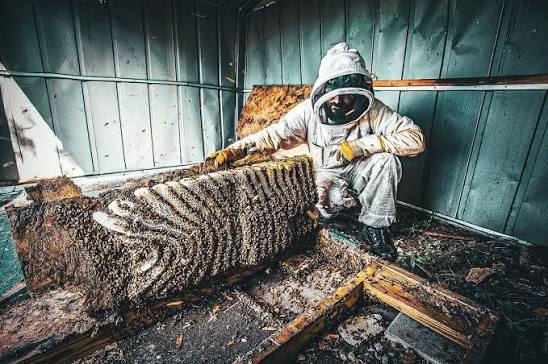
When a honey bee colony appears near a home, the first reaction is often to panic or reach for an insecticide. That can create more problems than it solves. Honey bees are valuable pollinators, and a colony living inside a wall, attic, chimney, tree cavity, or shed may contain thousands of bees. Effective honey bee removal requires more than simply getting rid of the visible insects—it means addressing the colony, locating the nest, and preventing bees from returning.
The situation also deserves attention because honey bees can establish surprisingly large colonies in protected spaces. A few bees entering through a small opening can eventually indicate a much larger nest hidden behind siding or inside a structure. If the colony is left undisturbed, honey and wax can accumulate, potentially attracting ants, moths, rodents, and other pests.
Honey bees typically look for sheltered locations that protect their colony from weather and predators. Natural nesting sites include hollow trees and rock cavities, but buildings can provide similar conditions.
Attics, wall voids, chimneys, soffits, crawl spaces, and abandoned sheds can all become attractive nesting locations. Bees may enter through surprisingly small gaps around vents, rooflines, utility penetrations, or damaged siding.
A swarm hanging from a branch is different from an established colony inside a structure. A swarm is often a temporary group searching for a permanent nesting site. In contrast, bees repeatedly entering and leaving one opening usually indicate that a colony has already settled somewhere nearby.
Common indicators include:
The longer an established colony remains inside a structure, the more complicated removal can become.
A careful approach starts with identification rather than immediate treatment.
Not every flying insect around a property is a honey bee. Bumble bees, carpenter bees, wasps, and yellow jackets require different approaches.
Honey bees generally have a rounded body with brown and golden coloration and a relatively hairy appearance. If identification is uncertain, avoid disturbing the nest until the species can be confirmed.
Finding the entrance is only the beginning. Bees may enter through one exterior crack and build comb several feet away inside a wall or ceiling.
Watch bee activity from a safe distance. Follow their flight path and identify where they consistently disappear. Listening for buzzing can also help locate a colony concealed behind building materials.
For example, if dozens of bees enter a gap beneath roof trim but no bees are visible inside the attic, the nest may be located between the exterior wall and interior ceiling rather than directly behind the entrance.
The removal method depends heavily on where the colony is located.
A colony in an accessible tree cavity may be relatively straightforward to address. A colony inside a brick wall, chimney, or insulated attic can require significantly more planning.
Consider the accessibility of the comb, the condition of the structure, and whether removing building materials could cause additional damage.
One of the most common mistakes is closing the visible entrance while bees are still inside.
If the colony remains trapped inside a wall, the bees may search for another way out. That could lead them deeper into the structure or into the living space.
More importantly, sealing an occupied colony does not remove the honey, wax, or brood. The biological material left behind can continue creating problems even after the bees disappear.
For established colonies, the objective is to remove the bees along with the comb whenever practical.
Simply relocating visible bees does not necessarily solve the problem. Comb containing honey and brood can continue attracting insects, while leftover honey may leak into insulation or wall cavities.
The specific procedure varies according to the location and structure. In some cases, limited access panels may need to be opened to reach the nest.
After the colony has been removed, the affected area should be cleaned thoroughly.
Remaining wax and honey can create persistent odors and attract secondary pests. Damaged insulation may also need attention if honey has soaked into it.
The goal is to return the space to a condition that no longer provides an attractive nesting environment.
Only after the colony and nesting materials have been properly addressed should permanent exclusion work be completed.
Inspect nearby cracks, gaps, vents, roof edges, utility penetrations, and damaged siding. A single opening may have allowed the original colony to enter, but other vulnerable points should also be addressed.
Spraying bees from outside may kill some foraging workers without addressing the colony. If the nest is inside a wall, the queen, brood, comb, and remaining bees may still be present.
Insecticides can also complicate later removal and create unnecessary exposure risks.
A homeowner may see bees around an entrance and assume that eliminating those insects solves the issue. However, foraging bees are only a portion of an established colony.
The nest itself must be located and addressed.
Even when bees have left, their former nest can remain problematic. Honey can attract pests and cause staining or odors, while old wax provides organic material that should not simply be left inside a wall cavity.
As mentioned earlier, premature sealing can redirect the bees into undesirable areas. Proper exclusion should be the final stage, not the first.
A colony can become defensive when its nest is threatened. Homeowners should avoid climbing onto roofs, opening walls, or directly disturbing colonies without appropriate equipment and experience.
Regular property maintenance can reduce the likelihood of bees finding suitable nesting spaces.
Inspect exterior walls and rooflines periodically for gaps. Pay particular attention to areas where different construction materials meet. Repair damaged siding and trim, maintain chimney openings appropriately, and check around utility lines and vents.
When inspecting a potential entry point, remember that bees do not need a large opening. Small structural gaps can provide access to surprisingly spacious cavities.
It is also useful to monitor unusual bee activity during spring and early summer, when swarming and colony establishment can become more noticeable. Early detection gives homeowners more options before a colony becomes deeply established.
If bees are gathering temporarily on a tree branch or other exposed surface, avoid spraying them immediately. A swarm may move on its own, while a local beekeeper or experienced removal professional may be able to safely relocate it.
Honey bee removal is most effective when it focuses on the entire colony rather than the bees that happen to be visible. Correct identification, locating the nest, safely removing the colony and comb, cleaning the affected area, and sealing entry points are the key stages of a lasting solution.
For homeowners, the most important principle is simple: don’t treat the visible bees as the whole problem. A colony hidden inside a structure requires a careful, methodical response that protects people, minimizes property damage, and avoids leaving behind the conditions that attracted the bees in the first place.


For UK gamblers looking to manage... Read More

The Role of a Range in... Read More
The Benefits of Quality Metal Fencing... Read More

Join The Discussion